

Podcast ft. StrengthsTransform Founder: Reflections of a Leader-Coach
In a recent podcast series by Labo des Talents, Mr. Poh Yeang Cherng — Founder and Principal Consultant of StrengthsTransform — reflects on his journey of helping individuals, leaders and organisations thrive through a strengths-based approach.
In this post, we distill some of his most compelling insights and stories into bite-sized audio clips. Stay tuned for updates as we roll out the snippets. For a deeper dive, listen to the full podcast episode at the bottom of this post.
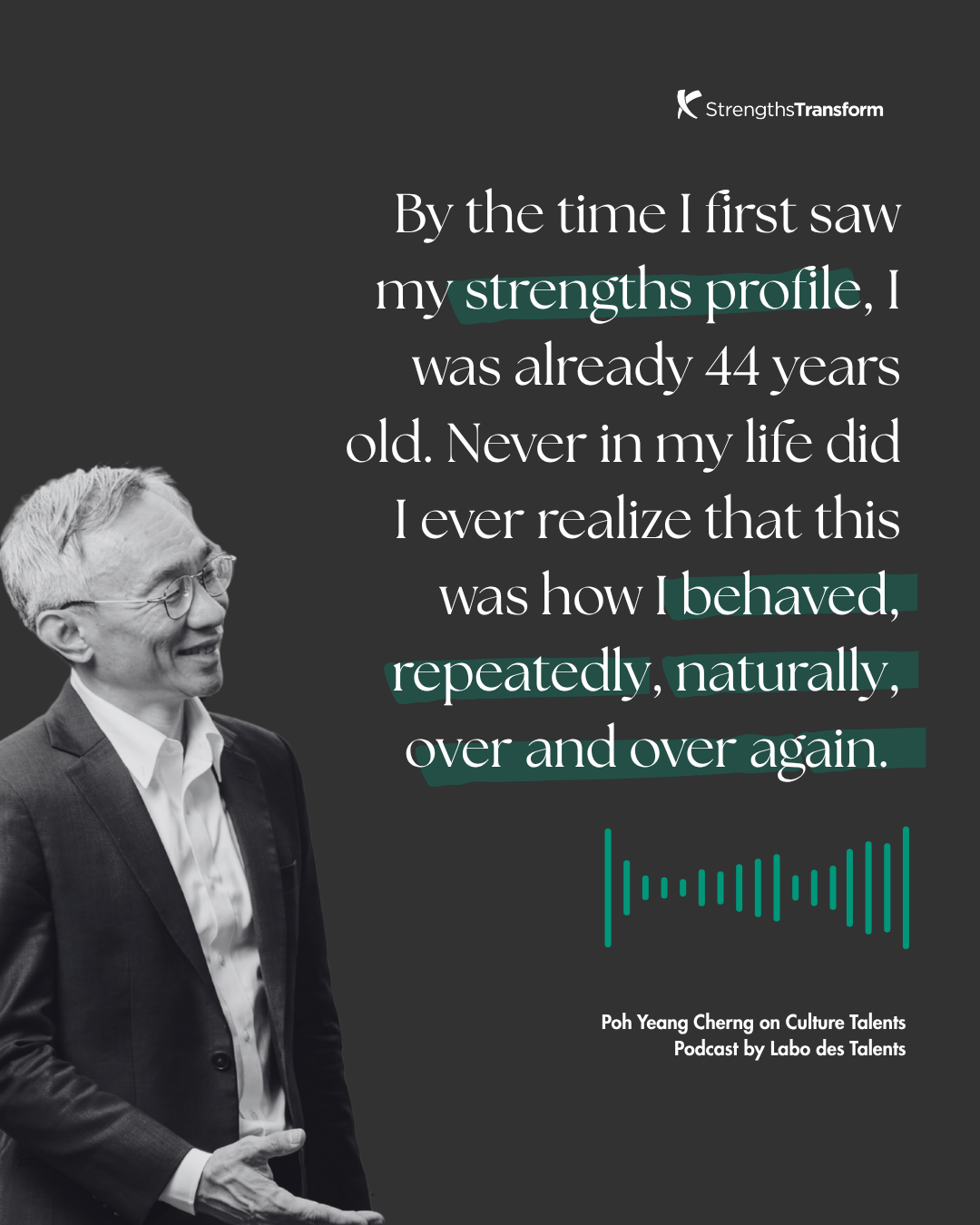
1) Discovery of CliftonStrengths Profile at 44 years old
This moment marked a turning point for Yeang Cherng.
At 44 years old, he discovered his strengths profile, allowing him to finally see the patterns behind his natural ways of thinking, feeling, and behaving. At StrengthsTransform, he began using the language of strengths to help others do the same and bring out their best selves.
Check out Yeang Cherng’s personal reflections here.
2) What Happens After Becoming Aware of What You Are Really Good At?
“One of the best things that has happened to me is that it helped me recognise what I do best, what motivates me, and what my best contribution to the world is.”
For StrengthsTransform Founder Yeang Cherng Poh, gaining this clarity was one of the most meaningful outcomes of discovering his CliftonStrengths profile. Check out the full post.
3) What Happens When Your Dominant Talents Go Into Overdrive?
Our dominant talents often drive success – but they can also easily tip into overdrive. How can we learn to manage our CliftonStrengths talents when they go into overdrive?

4) How to Sustain the Strengths-Based Language in Your Organisation
In this snippet, Yeang Cherng shares two key ways to sustain the strengths language and culture within your organisation.
1. Ensure the strengths-based language goes into everyday conversations
2. Embed the strengths-based language throughout organisation systems

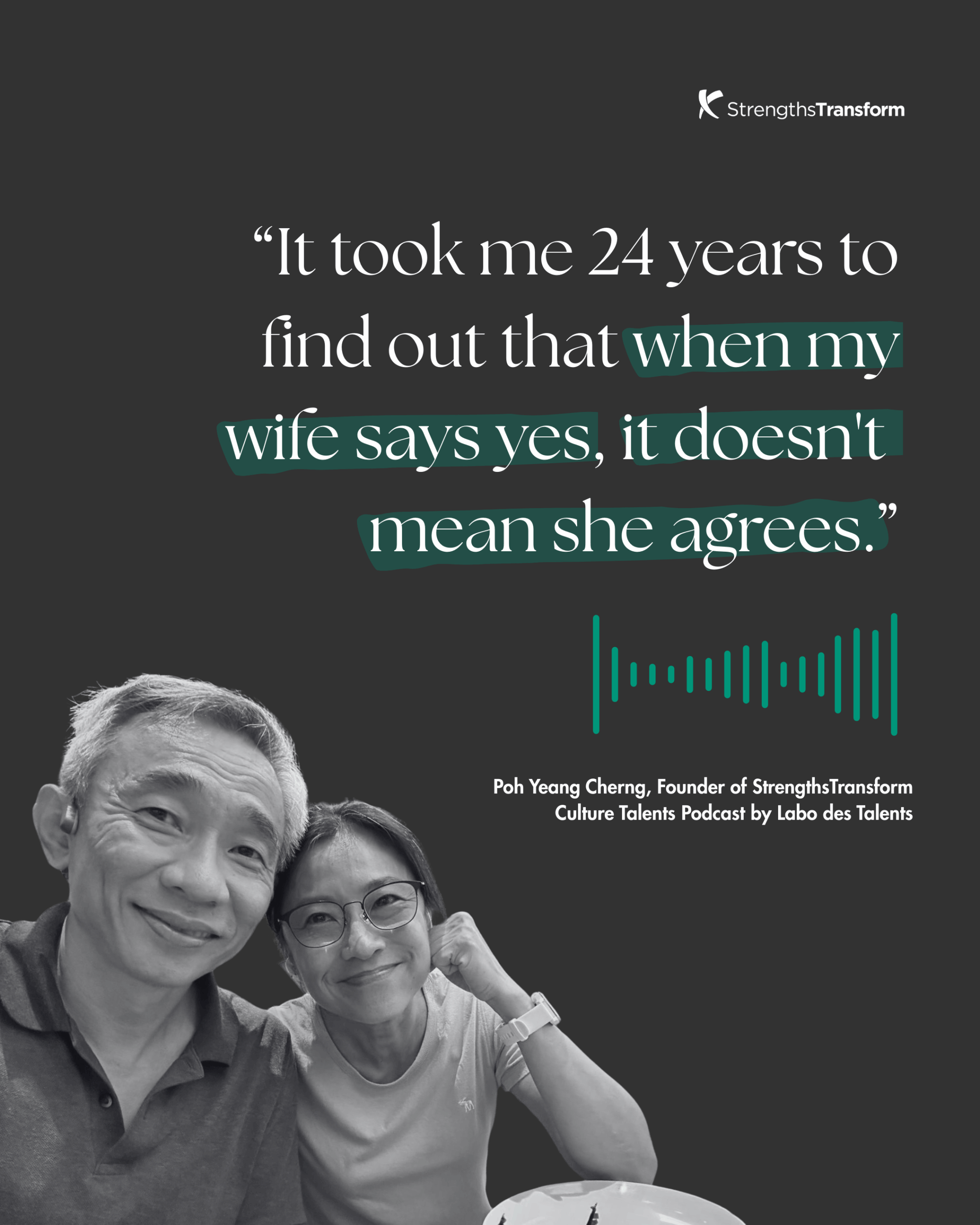
5) Diving into the Harmony talent: What finally helped uncover a persistent misreading of a common word “Yes”.
For Yeang Cherng (with low Harmony talent), a “Yes” usually means total agreement.
Yet for his spouse (with high Harmony talent), “yes” likely means “I can give in” or “I can agree to disagree”.
– For one – “Yes” means I expect follow through on what was raised
– For another – “Yes” means let’s move on, do not pursue this further and save our energy for other issues.
Check out how Yeang Cherng explains this contrast in their Harmony talents (and interpretation of “Yes”) in the full snippet below.
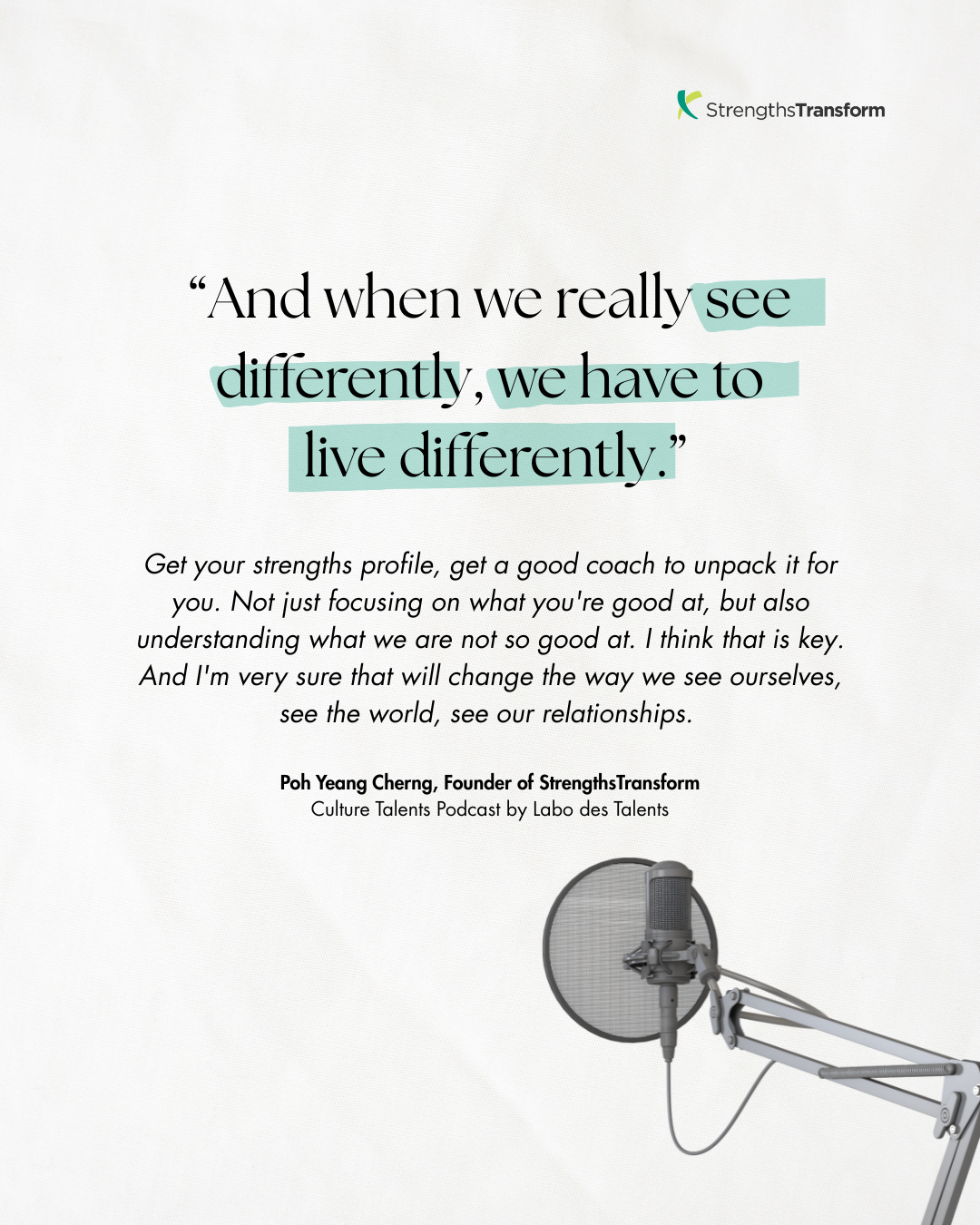
6) Changing the Way We See Ourselves, See the World, See Our Relationships
Whether you are seeking organisation-level change or stronger team collaboration, it all begins with having a good coach to help unpack your strengths (and your blind spots.) Only then will your strengths profile be truly meaningful and let you see yourself clearly (and hence, live differently).